
Bridging the Financial Missing Middle for Food Processing SMEs
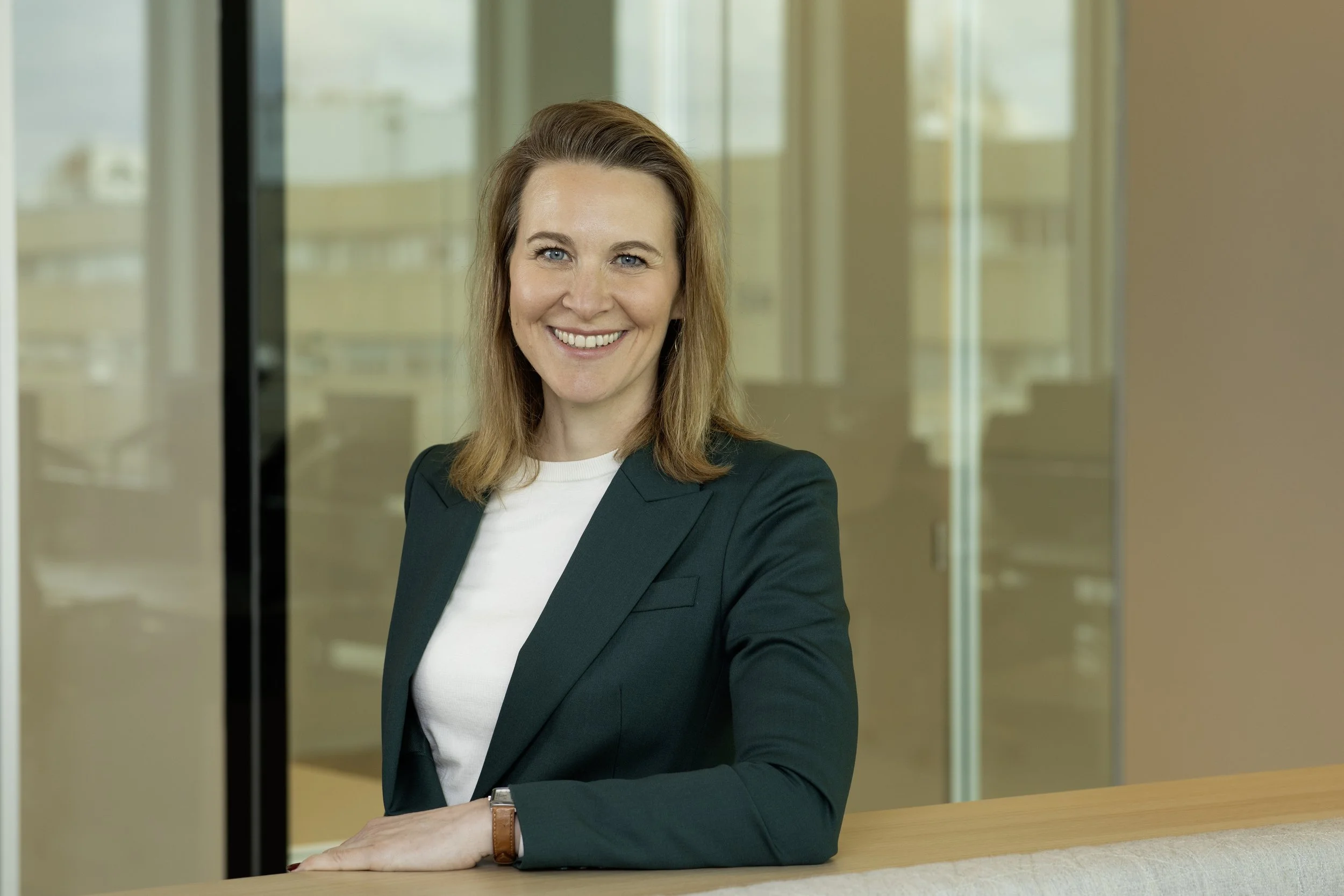
Food Flourish Ventures Founder & CEO Elisabeth Hirschbichler
Bridging the Financial Missing Middle for Food Processing SMEs. Mandla talks with Food Flourish Venture’s CEO Dr. Elisabeth Hirschbichler about financing the ‘missing middle’, food processors too small for microfinance and seen as too risky for traditional investment capital - bringing together capital, support in market access and food technology
Building an Integrated Impact Investment Platform to Support Food Processing
Transcript
Transcript
Mandla: Welcome to Deeply Rooted, the podcast about the business of food in Africa, where we explore the ideas, the partnerships and innovations shaping the continent's Transcript
Mandla: Welcome to Deeply Rooted, the podcast about the business of food in Africa, where we explore the ideas, the partnerships and innovations shaping the continent's food systems from the ground up. I'm your host, Mandla Nkomo. Across the continent, agri food businesses, especially processors, are at the heart of economic growth. They are the ones that provide the jobs, and they are very essential in food security. And yet, many of these businesses, if you talk to the owners, they really struggle to access capital that allows them to grow. And that's because they are caught in the middle. They are either too large for microfinance or too small or considered too risky for traditional investment capital. Today's conversation is rooted in a powerful and timely insights paper called Building an Integrated Impact Investment Platform to Support Food Processing; Challenges and Lessons from East and Southern Africa. This paper tries to dive into that gap, and tries to unpack it, and more importantly, tries to propose what it takes to bridge it. It was co-authored by our organization, Partners in Food Solutions and Food Flourish Ventures, which is an impact fund and business builder that invests in east and southern Africa agri food SMEs to help them grow and scale with profitability and sustainability. To unpack the lessons, the challenges, and what it means for the future of the food systems in Africa. I'm joined today by none other than Dr. Elisabeth Hirschbichler, the founder and CEO of Food Flourish Ventures. Elisabeth, welcome to Deeply Rooted.
Elisabeth: Thanks very much for the warm welcome. Really great pleasure to be here with you today.
Mandla: Now, Elisabeth, before I go into the paper, which is the subject of our discussion today, I thought we'd start off with a little bit more of a personal story. I'm curious to know, how does a bright, innovative person like you get interested, first of all, in food, in finance, in Africa, and impact. Tell me that story.
Elisabeth: Frankly, I've spent the majority of my career working in food and nutrition and trying to look at food systems much more holistically. It's something that has fascinated me from early childhood. I come from the western part of Austria, quite a rural area, and some of our family business was originally in the agricultural space. And then throughout my career with large global food ingredients companies and in consulting, I've been able to contribute to a lot of very innovative solutions around food, how to make food more tasty, more nutritious, more affordable - really deriving from that global experience. Looking at what the reality looks like in some of the emerging economies in this world, it's really this huge gap that has driven me to dedicating more time over the past couple of years around the topic of food security and how to drive growth in the private sector in small and medium sized enterprises, in Eastern and Southern Africa. There is enormous potential there. If we look at it from an economic opportunity perspective, there are fantastic businesses, entrepreneurs out there, but then there are structural challenges why those businesses can't grow. And so bridging that gap from the experience I've gained over many, many years in leadership roles in the global food industry to what we can do to accelerate execution and growth with small and medium sized enterprises - that's something I find extremely interesting and worthwhile to dig into. It's challenging, of course, we will be talking about the challenges today, but that really drove me to setting up Food Flourish Ventures, an impact debt fund, investing in small and medium sized enterprises, especially post farm, focused on women and youth in East and Southern Africa.
Mandla: So, because our podcast is about the business of food in Africa, I'm curious to know, why Africa? I mean, Latin America has got its own issues with food, Asia has its own issues with food. What drove you to conceive the idea of setting up your enterprise, Food Flourish Ventures, on the African continent?
Elisabeth: I was first working with entrepreneurs, with micro enterprises in that case in Ethiopia in 2014 and already then came in contact with and realized the enormous potential of agri food in this part of the world. I think there is an extremely interesting starting point around the variety of agricultural produce, but then also realizing what more can be done to add value and to create interesting and nutritious food products in this part of the world. Also, of course, if we think about the big challenges we see today with climate change affecting some regions much more than others and where the big population growth is happening, where there is actually need to create more resilient local food systems, East and Southern Africa really stands out as an area of great opportunity and challenge at the same time. This has led me to focus in this part of the world.
Mandla: That makes a lot of sense. The only comment I would make is that time and time again on this podcast, we learn that what connects people from whichever community they might come from to other communities is always food, right? Because we gather around together to have a meal, and so in this case, we've got someone from Austria, being passionate and inspired about the opportunity of solving a problem in East and Southern Africa. So that's really exciting for me. But now let's go back to the paper, right? Let’s start with the big picture, and what we've been talking about is, and I hear this a lot in conferences and events that I go to, the so-called missing middle of agri food finance. Everyone talks about it. I think Dalberg wrote a big paper about it many years ago and called out a number, and I've seen a new number of late. Why does this gap persist in your mind?
Elisabeth: Mandla, you're absolutely right. This really isn't a problem of awareness. We've been talking about it for some time - some sources cite up to 80-100 billion US dollars of annual financing gap in agri food SMEs on the continent. It’s actually a problem of fit. If you think about it, the types of SMEs we are talking about, and we've been working with, are companies that already have an operational track record. They have been in business for a number of years. They are employing maybe thirty, fifty, maybe even one hundred people, producing foods, creating offtake for smallholder farmers, supplying local food systems. They are at a point in time where they could really take the next step to grow and scale, but they cannot because they lack the right type of financing. Those types of companies would be looking for $100,000-$500,0000 US dollar in debt financing. They are too big for some of the grant or microfinance institutions. They are perceived as pretty risky from the perspective of the commercial banks and they're not attractive enough, maybe not scalable enough, from the perspective of larger funds or DFIs. That's when they get stuck. And I also find that personally frustrating with many companies we've been in contact with. Fantastic products, they're really on a great trajectory to further grow and scale, but then they get stuck. So: it’s now a question of how can we provide the right type of financing, fit-for- purpose for exactly those SME needs?
Mandla: In setting up Food Flourish Ventures, you didn't try to raise capital for farmers. You went somewhere else. You went to the post farm food processors, and you placed a lot of emphasis on this. Why do you think this particular sector of the value chain is so important?
Elisabeth: We clearly focus on post farm food processing because we see this part of the value chain as a “spider in the web”. These post farm food processors are the ones that secure offtake from primary production, from smallholder farmers that produce the fresh fruits and vegetables and they create food products that can be preserved, and be supplied as nutritious and affordable products to the local market. You really need to see those food processors as important connectors and multipliers in the whole agri-food value chain. We can create additional economic impact in that space, by supporting them to grow and scale. Of course there will be a job creation in the companies themselves, but, of course, the societal impact of strengthening those food processors will be felt both in the smallholder farmers space and more broadly by consumers that are able to benefit from these food products.
Mandla: And to the listeners, please note that I did not pay Elisabeth to say that, she basically gave the reason why PFS exists, and why we work with processors in the middle of the value chain. Now, let's dig a little bit deeper. One of the central ideas that I think you put forward in the paper and in how you've set up Food Flourish Ventures is this idea that, yes, it's about the missing middle it's about the financing gap, but if you just have finance and don't have technical assistance, it's not enough. If you just have finance and technical assistance and don't have market access, it's also not enough. And traditionally, these things have been looked at in a siloed kind of fashion. What changes do you think start to happen in a business, in an SME, in the post-harvest space, when you bring these things together? And I know you've got a nice way of calling these three elements. I'd love to hear what your thoughts are there?
Elisabeth: Thanks for teeing that up, Mandla, because I think that is also part of the raison d'etre for our strong collaboration between Food Flourish Ventures and Partners in Food Solutions. What we see and what we've learned, is that it's really three elements in an integrated manner brought together that can make a real difference when it comes to supporting companies to grow and scale. We call it the three C's: capital with a focus on debt, market connections, and, capabilities, that is food sector specific technology that is brought together in a combined package to support these small and medium sized enterprises to grow and scale. And what that actually does, very effectively, is, on the one hand, improve the ability for these companies to grow, and, at the same time, de-risking the investment from an investor perspective. So you have a win-win situation in which we're hopefully able to put the SMEs on a different trajectory in terms of their economic success and their ability to also successfully repay the financing.
Mandla: Elisabeth, when you talk about the capital, it’s definitely not one type of capital. I know that you've, mentioned debt, but the topic of blended finance comes up a lot in these development conversations. And in theory, it makes a lot of sense, right, that you want different types of capital that have got different return expectations and different levels of patience. What’s your view around the actual practicality of delivering blended finance solutions?
Elisabeth: Like you say, everyone agrees in principle that blended finance structures are suitable to address and unlock the growth of those agri food SMEs. Because if you are able to combine some more patient capital with more commercially oriented capital, you're able to actually make investments possible that otherwise wouldn't happen. In the context of Food Flourish Ventures, we foresee two complementary layers. On the one hand, a junior catalytic tranche, including a first loss layer, bringing in philanthropic capital, concessional funding. This junior layer then also allows us to add on more senior, more commercially oriented private capital that otherwise - from a risk-return perspective would not necessarily come in to support agrifood SMEs. Now in principle, as I said, this is great. In practice, it is proving slightly more challenging because those different capital providers have different expectations on return, on risk, on impact areas they would like to focus on, on target geographies, target groups, on timelines. So, structuring a blended finance vehicle, bringing in all these different expectations from different capital providers, is time consuming and it's complex, and we're obviously trying to do that also as a newly emerging fund. Trying to weigh the alignment of investor interests with still creating a vehicle that is not overly complex is something that is not to be underestimated. So this is an area where we are very keen to also continue to learn and team up with others to see how these structures can be made as practical and feasible as possible.
Mandla: Elisabeth, what you describe totally makes sense. But it sounds like in putting together Food Flourish Ventures, you've been met with a few surprises around, while it totally makes sense to structure capital instruments in the way that you describe, the practicality of actioning it is hard. What has surprised you the most in trying to build Food Flourish Ventures?
Elisabeth: I think it is the diversity of investment and donor mandates, and the rigidity, at the same time, of trying to combine them into something that works overall. I fully appreciate that different organizations adhere to different directions, objectives, strategies and mandates. But what really surprised me ultimately is that even though we all share the mission and vision of trying to support food systems, food security on the African continent and beyond, when it comes to trying to align all these expectations and trying to create a meaningful, relevant whole, those constraints are making things much more difficult than they would need to be.
Mandla: Well put, and I totally agree with you. My experience has been that the issue is not a shortage of capital, it’s a shortage of alignment and creative ways of standing up capital instruments that can be fit for purpose for the sector that you and I are talking about. And I want us to talk a little bit about that. Food processing businesses don't behave like your typical, Silicon Valley, kind of play. It's not your typical venture backed sector, it's much more capital incentive, it's much more exposed to external shocks. So how should investors be rethinking the risk associated with investing in this space? Because from their side, they're saying, look, this is going into a slippery slope. You know, we’re almost sure we will lose our money. What would you say to them about that?
Elisabeth: I think the starting point is that we cannot benchmark agri food processing SMEs against traditional private equity or venture capital models because they're just fundamentally different businesses. And as you pointed out, in food processing, we are talking about a physical end product, physical throughput, there is a need for assets. Food processing scales much more gradually and is also much more exposed to external shocks, for instance, around supply chain and raw materials, than a more digitally driven, fintech or other tech-based business model. So, if we were to apply the same expectations around growth, returns, and scalability, then we're essentially mispricing the risk from the outset. What we would be calling for, is a much broader, more systemic perspective becausefood processing is so relevant as connector withmultiplier effect in the value chain. Recognizing the important role that these businesses play in stabilizing the supply chain, creating jobs, strengthening local food systems, should also be reflected in how we think about risk and return. It's a difficult one but shifting from the purely financial lens to that broader systems lens when we're talking about investments in food processing, is a very important shift we need to make.
Mandla: One of the things I've heard from people who are trying to invest in this sector, especially on the African continent, is this small matter of foreign exchange risk. What's been your experience of some of the challenges that SMEs experience on the ground when they access foreign currency denominated debt instruments?
Elisabeth: The whole topic of FX denominated financing is a huge constraint for agrifood SMEs. Also at Food Flourish Ventures, what we are offering is, at this point in time, $100,000 to $500,000 US dollars in debt financing. It's very clear that local currency instruments would be preferred, especially in cases where those small and medium sized enterprises are serving local markets and therefore are generating revenues in local currency. What could happen is that a business that is operationally doing well, is sound and growing, then, suddenly, purely due to currency movements, comes under pressure and being able to serve those debt obligations becomes a real issue. So,I totally recognize this challenge. We've also been working with partners to think through what are opportunities to plug in more of a local currency element or find ways to blend what we are able to offer. Of course getting more local LPs on board and local investors on board would help to provide more local currency financing. All I can say is it's obviously a key issue. Very few of the funds have found ways to properly address it. But this is an area, especially if we want to serve SMEs that primarily produce and sell in local markets that would help to significantly unlock those growth potentials for those SMEs.
Mandla: I think you're absolutely right. I was talking to a fund manager recently, and I'll not mention their name or their country, but they're saying that because in their country, they're starting to have a much more stable pension space, they've managed to actually convince one of the pension funds to make available capital in the local currency, and allow it to be deployed in spaces where there's a greater risk tolerance, and a very high expectation for impact. Now you've worked all over the world and I'm curious to hear from you, how have regions of the world like Asia, Southeast Asia, done it? Because exactly half a century ago, they were probably exactly where Africa is, where you had a lot of smallholder farmers who were battling to access markets and you needed to have a processor sector to respond, and respond appropriately. Have you picked up or gleaned any lessons from that part of the world -- Asia and Southeast Asia -- around how they have done it? How have they financed this transition?
Elisabeth: In terms of developing the sector, I think one element is around trying to create more efficient value chains. From the very starting point of the raw materials, all the way to the consumers. And there we see in east and southern Africa that often, within those value chains, you have inefficiencies or missing links. By putting in place a more effective processing industry, some of those missing links can be addressed. The other crucial element, is around capabilities and ability to scale. This is where the model of Food Flourish Ventures together with you, Partners in Food Solutions, also aims to make an impact by bringing the right food sector specific technology, operational knowhow, product development knowhow around how to formulate the best food products, how to step up on hygiene, how to improve nutritional content, etc. together.. Last but not least, financing structures need to be fit for purpose for the specific, regional and local needs that we have. I'm sure some learnings can be taken from other regions, but ultimately, the solutions also really must fit the specific requirements of the local SMEs. This is, I think, something where we need to continue to work with all the players in the ecosystem to create solutions, shape solutions that make sense.
Mandla: If you had to give a piece of advice to the likes of private donors, developmental finance institutions, (DFIs), private investors, what would you say they need to do to help us unlock capital availability and do so at scale? What would be your advice to them?
Elisabeth: Each of the stakeholders that you mentioned have a very important and distinct role to play. If you think about the donors and providers of philanthropic capital, they can really take early risk and provide that catalytic funding as they already do. We see a number of initiatives,like the FASA fund, for instance, that is deliberately stepping into that role of providing downside protection and make it easier to attract additional private capital. TheDFIscan help to structure and scale solutions later on. And I think private investors also bring, in addition to the capital, more business discipline, ensuring that the right opportunities get funded and the capital is directed to those businesses who have the best potential to be successful in the longer term. In sum,all the different actors have an important role to play. Now the question is:how do we bring the different pieces together into a puzzle that is better aligned and where we have, as we discussed before, more flexibility to bring the different mandates into a bigger picture that works as a whole ?On a side note, we should also considersimplifying and standardizing some elements like reporting and impact measurement, especially when working with SMEs. These companies are small, they're focused on the business, so complexity can also very quickly become a barrier for those businesses. If we bring the different actors together, there is a lot of opportunity to create additional economic value and impact across the whole system.
Mandla: Well, I'm sure there's someone out there, Elisabeth, who's listening to you and me talk today and says, I hear you guys, you're making it all about capital, capital, capital, but the real issue is that there's no pipeline. What would be your response to that?
Elisabeth: Thanks very much for teeing up this question.If you look at the economic opportunity, the starting point is that agri food is a fundamentally important sector. We are talking about 25-30% to of GDP, and growing, in many African countries and significant employment. At Food flourish Ventures, over the past months only, we have assessed around 130 small and medium sized enterprises in our target geographies, that is. in Kenya, Uganda, Rwanda, Tanzania, and Zambia, across our target sectors and against our Food Flourish Ventures criteria. What we found is a pretty strong pipeline of viable and well-run businesses, and we have prioritized about 15 of these opportunities that we would be able to deploy capital to in the short term. From our perspective, there is not a lack of pipeline quality. Theissue is that there is not enough capital that actually fits the needs of these businesses. And then we are back to return expectations, timelines, and the structuring of blended finance.
Mandla: I couldn't have said it better. I think, in the work that people like you, and me, and our organizations do, every single day, we are seeing amazing businesses with great potential, but basically stuck in a rut because they simply don't have that jet fuel that will propel them, to the next level, whatever that looks like for them. It simply isn't there. And there they are left to basically grow organically and for some of them to get to certain levels that we think are a good size might take them a hundred years at the rate that they're growing. But if you get the right kind of finance coming in at the right time, match with a good management team, a good operation, scale happens and happens in a phenomenal way. Now, I still think that you're probably one of the most optimistic people I've spoken to about this conundrum of mobilizing finance for food processing businesses. What gives you optimism right now and where do you see the moment coming from in the future?
Elisabeth: We've of course talked quite a bit about the challenges, but indeed, what gives me optimism is the business leaders, the business owners, the entrepreneurs, that we've been working with over the past couple of years. It's really impressive to see what they're doing in their businesses, in dairy processing, in aquaculture, in juice processing, and various oils and fruit processing. To see the ambition and the achievements, despite a hugely difficult environment, is extremely impressive. By putting in place some improved support structures, there is a real opportunity to help these businesses take the next step, because there is already so much energy there, so much resilience and so much real opportunity. It's that continuous interaction that really gives me the optimism that we are on the right track and that there is a lot to gain, especially when we team up more effectively across the whole ecosystem. In this context, I also really want to thank you and your whole team, all the colleagues at PFS and your associated experts, and the global food companies you work with for the excellent collaboration.We're really on to something in creating that integrated approach of capital and capabilities and market connections. The question is really, how can we organize ourselves even better to make it happen?
Mandla: I think that's a nice way to end this conversation, Elisabeth. Thank you so much for joining us. Thank you for sharing both the ambition, but also the hard realities that are associated with this kind of work.
Elisabeth: Thank you so much, Mandla.
Mandla: What really stands out from this conversation is that unlocking the potential of African processers isn't just about capital, it’s about the right kind of capital paired with the right support, and grounded in the realities of how these businesses actually grow. And as we've heard today, the opportunity is huge. It's enormous. And I'd really encourage you to explore the full insights of the paper. It's available on our website, www.partnersinfoodsolutions.com. But it's also available on the LinkedIn page for Food Flourish Ventures. It's a thoughtful and honest look at what it takes to build more inclusive and resilient food systems. So if you enjoyed today's conversation, please be sure to subscribe at deeplyrooted.blog or at Apple Podcasts and share the episode with colleagues and friends who care about the future of food in Africa. So until next time. My name is Mandla Nkomo, and this is Deeply Rooted.