
Co-ops Have the Power to Create Resilience
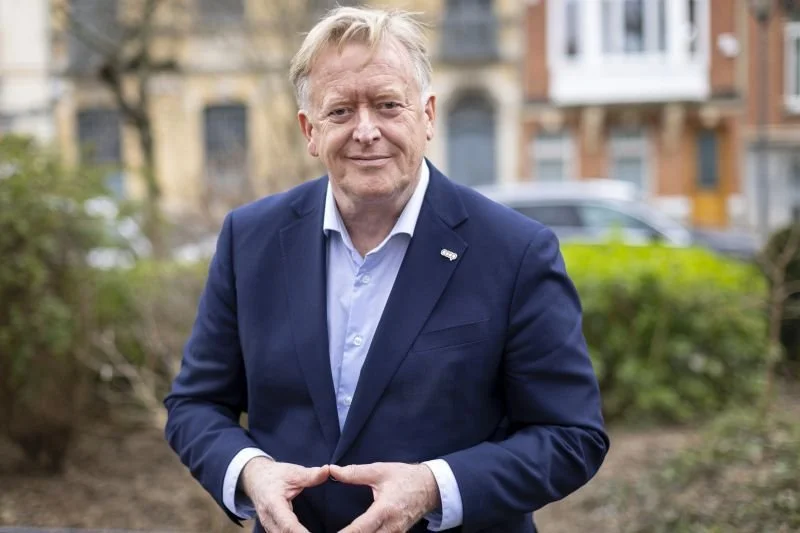
Jeroen Douglas, Director-General, International Cooperative Alliance
In this episode of Deeply Rooted, Mandla Nkomo speaks with Jeroen Douglas, Director General of the International Co-operative Alliance, about the power of cooperatives to build more resilient, inclusive food systems. Together, they explore ownership, community development, and why shared prosperity matters for the future of food.
Transcript
Mandla Nkomo:
So, hello and welcome to Deeply Rooted. This is the podcast where we explore the people, the partnerships, and the ideas working to strengthen food systems across Africa. My name is Mandla Nkomo, and I'm the CEO of Partners in Food Solutions. So today we're joined by Jeroen Douglas, the director general of the International Co-operative Alliance, a global organization that connects and represents more than a billion cooperative members worldwide. Let that sink in now. Jeroen brings more than just three decades of experience working in the intersectionality of sustainable development and global supply chains. Before joining the ICA, or the International Co-operative Alliance, in 2024, Jeroen had served as the executive director of Solidaridad, where we worked together. Solidaridad is a global organization focused on building fair and sustainable supply chains in commodities like coffee, cocoa, cotton, and soy. Now, over his career, Jeroen has really helped to change the way things work with regards to trade, responsible commodity production, and the cooperative-led movement, working with farmers, businesses, and governments to create more inclusive economies. In today's conversation, we'll talk about the evolving role of the private sector and cooperatives in strengthening food systems, what it takes to build partnerships that truly work, and why collaboration across sectors is essential in creating lasting change. So, my good friend and my brother, Jeroen Douglas, welcome to Deeply Rooted.
Jeroen Douglas:
Wow, what an introduction. Let's indeed have a good chat.
Mandla Nkomo:
Thank you so much, Jeroen. So, I think the challenge I'll have with this particular discussion is that I'm going to ask questions for which I probably know a lot of the answers, and one of those questions is about your personal journey. As a young man, you grew up in the Netherlands and found yourself in a place called Oaxaca. And somehow, that inspired what your life's work was going to be. Do you mind telling parts of that story? Of course, those that you are willing for the public to know.
Jeroen Douglas:
Sure. And I'll try to surprise you still. I hope I will. So, indeed, you know, I was a typical rebel with a cause already at an early age, thanks to my dear mom. She raised me with a deep sense of social justice for all kinds of reasons. But anyway, I really became aware of how unjust the world was at the age of fifteen only, when we had to deal with nuclear missiles from the United States on our soil and we wanted to get rid of them. So we protested. And I realized all then that the world is not necessarily a righteous place, and the power is imposing in many people. So that was the start, and it developed into my desire to deliver my talent to help people in not such fortunate situations to build a better life. And for many reasons, I ended up working with indigenous people in the Andes at five thousand meters of altitude the Aymara people. The Aymara people, actually taught me how a balanced community looks like. I mean, in a way, Mand la, this is how life was meant to be in its original form and how I discovered it. This perfect balance between an agricultural community, relationship with the already past individuals who transformed into spirits, as well as the relation with nature, was for me like an eye opener I've never seen before. So I sort of discovered a blueprint of what a beautiful society could look like. I'm, of course, now looking to the Indian in my own consciousness, but it helps me to give guidance to the rest of my life. And this unique experience, which I managed to do through my study of anthropology, social economy, and theology, has led me to an organization that brought us also together, La Solidaridad, a church-linked organization that was fighting for a just and social society. And only at the beginning of my career over there, in the nineteen nineties, were we starting to give that an economic hook. How can we build not only a situation for farmers so that they can have a decent daily meal, but how can we also organize the structures of injustice in a better way? And that has created the model of fair trade. We did that. I was one of the co-founders, as a student, with the team of Solidaridad, and it's now a well-known model that delivers to seven hundred million people a daily solution.
Mandla Nkomo:
Clearly, when I look at what an organization like Fairtrade does, it tries to ensure that smallholder farmers get a fair deal for their efforts. And as Partners in Food Solutions, the reason why we do the work that we do, which is to work with processors, is to make sure that farmers get a fair and consistent deal for the raw ingredients that they produce and that consumers, on the other hand, get safe, nutritious, and affordable food. Now, help me understand how you see the role of business in solving the challenges we see on smallholder farms across the world and the challenges we see on poor urban people's plates. Yeah, every time it's dinner time, what role can business play?
Jeroen Douglas:
Yeah, you're addressing one of the biggest questions we have on earth: the conundrum of a healthy, sustainable, and just food system, right? And if we zoom in, particularly on Africa, we see there are some systemic problems that we need to solve. And I think business can do good, but only if it allows for ownership in the supply chain from a farmer's point of view. And we need to move from an extractive model to an ownership model. That's why I think also cooperatives can help as a business in that. But if we would zoom in on the African case, which is also very much important to your organization, we see that this food conundrum is not necessarily moving in the right direction. We have still seventy billion dollars that Africa is importing in terms of food. And if I remember, when Dr. Adesina took the leadership of the African Development Bank, he pledged that the Africa Food Program would lead to zero dependence on food import. And that's not happening. So I think what business needs to do is to deliver a healthy food system. If we look to the well-known Lancet EAT program 2.0, in particular, just published, it all says we need to work on a healthy food basket. And that is one of the main problems Africa and other countries face: those ultra-processed foods, because UPFs are really producing a lot of problems. Obesity is connected to often-subsidized imports, which is destroying the need for local and healthy food systems. So we need to build indigenous powerhouses where we replace all these imports of wheats and sugars with cowpeas, sorghum, fonio, teff, and other local cultivars that are healthy and can be produced in a local context. I think that is where business can help: to build local food systems rather than imported ultra-processed foods. I really, I really like what you're saying because when I look across the membership of the Partners in Food Solutions organization, we've got businesses that were, what you describe to the United States, local businesses, businesses that were farmer-owned or serving local farmers and built the foods that grew the United States, especially after the two world wars, and really ensured that the challenges we have in the US now, of an aging population, are a result of decisions that were made, you know, fifty, sixty years ago in terms of what people get to be served. Mandla Nkomo:
You now lead the International Co-operative Alliance, and many people probably don't know what the ICA is all about. For starters, I was blown away to hear that you represent over a billion members. I think you guys deserve a seat at the United Nations. Tell us a little bit about the International Co-operative Alliance and how it plays a role around building stronger and more resilient food systems.
Jeroen Douglas:
Yeah. Thank you. So the International Co-operative Alliance was, I think, the second, in terms of age after the Red Cross, creating a global civil society organization, eighteen ninety-five. So, cooperatives were—I didn't know about. No. Yeah. I told you, I will bring you some facts you didn't know. So, cooperatives, their recognition started somewhere in the neighborhood of Manchester, UK, actually a village called Rochdale. There's the official Rochdale Pioneers Museum. In 1844, when, you know, in the early days of industrialization, workers had to make a choice: am I becoming a member of a trade union and be sort of a slave for the rest of my life? Or am I instead, as a worker, becoming owner of my own enterprise? So the co-ops are a not-for-profit enterprise with this double mandate. On the one hand, it's a business that needs to be profitable, and on the other hand, it's a membership-owned institute that is delivering on community development. So it's a unique enterprise model that was then founded in eighteen forty-four. And the model is probably—no, it is—the most scaled alternative to, I would say, predator capitalism. And it is most scaled because in virtually all the nations of the United Nations, co-ops are active. We have three million cooperatives in the world, and they indeed are one point one billion members. So it's a staggering number. I don't manage those 1.1 billion, let me just say that. Actually, I would think that probably seventy or eighty percent of those members are hardly aware that they are a member of a cooperative. But it's like with the Catholic Church, you know, I think we are second only after the Catholic Church in terms of membership. But the model itself has proven a very strong solution as a middleman in the sense that it's creating a space where people can own business and also deliver on community values. And co-ops are doing that already since 1895 in a global umbrella because in 1895, the first co-ops were also created in the southern part of Africa. And by that, all the continents had their co-ops. In Latin America, it started in 1890; in Oceania, in 1893. So all around 1890 , all the continents had their co-ops. And then people said, you know, we have to have one global umbrella that represents those three million co-ops by now. Back then, it was, of course, less so. My main mandate is to unify the cooperative movement, despite all its differences in different sectors. So food is just one of the cooperative sectors. We are in fishing, in health, in housing, in insurance, in banking, in consumers, and manufacturing, in energy.
Mandla Nkomo:
So co-ops are everywhere in the economy. And Jeroen tell me, when you looked at those of your members that, you know, are in the food sector, and one of our newest partners is actually a member, I saw them listed in your annual report, are there any unique features that you see in these food-based cooperatives?
Jeroen Douglas:
Sure. The idea of having direct benefits for members, like financial benefits, special member products and services, but also non-financial member benefits, indirect benefits, job creation, education training, one-member, one-vote decision on allocation of cooperative funds, better deals at third parties, and then also benefits for the local communities, you know, participation in local networks, offering knowledge and networks related to local environment, redistribution of part of the net surpluses in local society, and then also benefits in society itself, are the sum of what makes co-ops quite unique in terms of what is the cooperative advantage or benefit, right, in the form of food. If you are a poor farmer dependent on supply chains and still struggling for your business case, cooperatives can be this middleman where you have collective bargaining, collective negotiation, and also better access to capital, better access to market information, better access to technology, and better access to prices. So co-ops have a long-standing history in that. And that's the unique model, and that's why they are still so alive and kicking.
Mandla Nkomo:
Exactly. And I think you would have heard this viewpoint that, in Africa, cooperatives haven't worked. And I know you would want to dispute that fact. Of course, could you tell me about some of your experiences in working with Africa-based cooperatives, of which there are many? We have them as our clients, as Partners in Food Solutions.
Jeroen Douglas:
So most successful are the saving and credit cooperative organizations, the Saccos, and particularly in Kenya and Uganda, where member pools of savings and affordable loans come together and they have created low-income household and small enterprise loan solutions to millions of people. And Saccos are strong, you know. It's inclusive. Member entrance fees are low. It's eligible for almost everyone who wants to join. And now, with smart digital platforms and mobile banking and blockchain technology included, it also offers real-time solutions quickly and transactions. And that makes Saccos really a very strong example. I think those are the most successful, I think, in co-ops in Africa, but not alone. If we look to larger cooperatives in cocoa and different commodities, you can also see that they are strong because of being a cooperative structure. And, well, in Morocco, there's a lot of cooperative structures in housing. Egypt, Cairo alone, has, I think, one and a half million houses that are cooperatively built up. So there's a lot of evidence. But it's not only in agriculture, as I said, the Saccos are very much in rural areas and very much in function of supporting farmers.
Mandla Nkomo:
Yeah. No, you're absolutely right. And I think I can testify to that fact. Some of our cooperative clients are in the dairy sector. And what we've noticed is that they initially formed around the savings. The savings then allow them to enter the dairy sector, to purchase cows and so forth. And then, because they don't want to be perpetual suppliers of milk and not share in the upside of processed milk, they then go into processing and build processing businesses. And I think this has been a model that seems to have worked very well in Kenya. At the heart of that, though, Jeroen, is really about partnerships, right? Because you cannot advance any sector, any industry, in the absence of partnerships, whether it's in the food industry, it's in the housing industry, or whatever. There needs to be partnerships. Besides the collective bargaining power, do you think there's anything else that gives cooperatives an advantage in forming partnerships, both downstream and upstream, in the supply chains, especially in food?
Jeroen Douglas:
Yes. So it was the well-known economist Amartya Sen who said, you know, it's all about capabilities, and co-ops offer members the capabilities to develop so that they become more professional players in the supply chain. And it's also the awareness. If I become a member of a co-op in food in Africa, I have also this sense of well-being. Well-being is very important. It's much more important than prosperity alone. It's not only the income side of things, but also having a social cushion, a family, an extended family that allows you, in bad days, to work together, to fight for a better harvest, to fight for a better contract, or overcome storms, flooding, drought, all those—in co-ops, there are much more cushions to handle those adverse situations. So I believe co-ops have the power to create resilience and a well-being above prosperity. And that fits to this idea of this democratic economy a lot, where you not only focus on your income situation, but on the concept of having local well-being in your community. And co-ops can deliver on that. And it can also help members, through education and training, to expand the business into different directions. So in that sense, they have a lot of potential.
Mandla Nkomo:
And so what advice would you give to an organization like ours? We focus very narrowly on how we can help processors become better at what they do, whether it's grain handling, whether it's primary processing into consumer-ready products for African consumers and for global consumers. How do we advise them in terms of how best to relate with their supply side, which is often dominated by rural cooperatives? Is there a piece of advice sitting from the International Co-operative Alliance to say that as processors, here's the opportunity that you are missing or here are the things you need to watch out for?
Jeroen Douglas:
So, running a business is a professional job. And if your focus is to build smart infrastructure and enable good business, that is what you need to do. And what the advice could be is: can we also create more empowerment for communities so that they can build maybe a vertical business upside down? Or I mean, bottom up, and that's one advice. You get more power if you have more control over the supply chain. So just being a producer of raw materials is just the first step. Organize it and create a cooperative is the second step. Then together, through economic empowerment, maybe move into processing would be the third step. So gradually building ownership, rather than being, you know, the transactional last end of an exploitative supply chain, that is, I think, the pathway for development. And in relation to that, Mandla, a co-op can also, as I say, be a place where you can further develop yourself as a human being and also create local solutions, community sense. And that's very—the sense to belong is very important.
Mandla Nkomo:
Thank you so much for that, Jeroen, because for us as PFS, we get a lot of support from individuals and families. And what they always tell us is that the only reason why they support PFS is because they want to see benefits at farmer level. And what I'm hearing you say today is that processors who are conscientious, who are mission-driven, need to connect and support cooperative development in their supply chains, because that not only strengthens the supply chains, but also increases the share of benefits to more people. And that's the ultimate sustainability of the supply chain. I want to shift gears a little bit now, but just so that
Jeroen Douglas:
It's important that your sponsors understand that benefits are more than just financial and income-related benefits. And that is where I believe that co-ops are an important player.
Mandla Nkomo:
Fully agree. Now, one of the things, Jeroen, that you've done throughout your illustrious career is you've held a lot of leadership positions. And you've always seemed to be the guy people turn to when organizations are going through change. And I want to tap into that experience and get some insights and advice from you around: so what does responsible leadership look like today for people working to build more inclusive and sustainable economies? Because—and here's where I'm coming from—I think, no disrespect to my colleagues in the development sector, but I honestly think that often we are just reduced to PowerPoint presentations that repeat the same old, same old. We go on these panels, sit around the table, and repeat the same things that were repeated thirty years ago. I feel we are losing our credibility. Talk to leaders now about what is the kind of leadership that we need to build more inclusive and sustainable economies.
Jeroen Douglas:
Yeah, that's a very big question too. You know, we're moving from a multilateral to a multipolar world, and it's difficult to read what is now the leadership an institution needs. If I look to the International Co-operative Alliance that I serve, leadership is really there to ensure that the sense to belong, the unity, is maintained. I'm serving a global organization, Mandla, and we are in times of geopolitical fragmentation more than ever before. So the project top down to organize globalization, as it's been thought through by the United Nations, by the ones that want one global system of legality and lawfulness, is now rapidly changing. As the Prime Minister of Canada at the World Economic Forum said, this is not a transformation. This is a disruption. Considering that world leaders now say, you know, I'm going to build my own peace team. I'm going to occupy that country. And cooperatives have always been globalization, bottom up. So it is a leadership now needed to make everyone heard. If you are a cooperative member from Iran or a cooperative member from Russia or from the United States, or from Brazil, or from your own country in Zimbabwe, and keep that connected, it is a hell of a job. And I feel that leadership nowadays is about maintaining those values in the right place. And that is very difficult because, you know, there's a lot of tension for change.
Mandla Nkomo:
Well, one of the earlier people I had on this podcast, Jeroen, is a good friend of mine and mentor, Dan Dye. He used to lead one of North America's largest flour milling businesses, and he said to us that one of the most important things we need to do as leaders is to lead from the heart and put people at the center of our thinking. And I think what you've just described says, well, everybody has a voice, everybody has agency. And if we're going to stand up and represent, whether it's cooperatives or, in my case, processors that support more holders, I really need to mean that. And I really need to be genuine, and I need to properly represent that. So, really, really appreciate that. But I want to cast our eyes into the future. You're a little bit older than I am, so if we're in East Africa, I would call you Mzeh, and therefore that means you're automatically wise. And I'd love to get some wisdom from you today, Jeroen. So when we look into the future of food systems, especially in emerging markets, and I know a lot of your members come from that, what gives you the most optimism? And I think you've touched on it already around this so-called local foods, etc., that gives you optimism in the emerging markets.
Jeroen Douglas:
I was thinking about this question, and I thought, I have to give you a nice one-liner. And I came with this: we need to move, you know, from farm to fork to fitness. And I think that is where the solution lies. And so we need to have a good farming model. We need to have good consumption model, and we need to be preventing getting ill by eating the wrong things. So from food, from farm to fitness is, I think, where we need to focus on in food systems.
Mandla Nkomo:
Stunning, stunning, stunning. I knew I could rely on some aged-wine wisdom from you on this question, moving from farm to fork to fitness. And that's F3, and we're going to patent that and call it the Jeroen Douglas F3 model. Yes. For people like you and me that are entrenched in food systems, that wake up every morning and are trying to make a difference for building better food systems, what would be your last piece of advice to the listening audience at this time?
Jeroen Douglas:
Well, as you say, listen, you know, I think that's the essence. And it goes a bit back to this question of leadership nowadays. You know, I become very humbled nowadays by listening to all the different realities from all parts of the globe. And I'm trying to entirely deconstruct my European background by absolutely trying to become in a sort of value-neutral environment where I really try to rebuild my principles based on what I hear from the different parts of the world. And really, Mandla, I fell in love with the cooperative movement because there were some who were using the word wisdom. There were some wise individuals way before us that defined the seven key principles of what a co-op is all about. And that is the thing that supersedes all the different regions. So it's about open and inclusive membership. It is about a democratic model. It's about economic value distribution. It is about autonomy and independence. It's about a good educational model. It's about the organization of business among the right individuals. And it's about caring for your community.
Mandla Nkomo:
I like that, I like that. And I think that causes me to stop and think that what the world needs today seems to be less dogma and less quickly forming opinions about what poverty looks like and how it can be solved, to shift to listening mode and hearing what the people themselves are saying their aspirations are, and working alongside them, I think, to make this journey possible, to transition from whatever they are now to what they aspire to be. And I think that takes a level of humility that I think the world needs today. Now, only Jeroen can get me to a point where I have to stop and think very hard about my life choices. And I think our conversation today has done that. So, Jeroen, it's really been a lot of fun catching up with you and getting your take on sustainability, on food, on the cooperative movements, and how this can make a difference in the continent of Africa. And so I want to thank you for joining us and for sharing your insights and experiences. And thanks to everyone for listening to Deeply Rooted. If you enjoyed this conversation, be sure to subscribe to deeplyrooted.blog or at Apple Podcasts, and share the episode with colleagues and friends who care about the future of food. Until next time, this is Deeply Rooted, and my name is Mandla Nkomo, signing off.