
Every Step in the Food Chain Matters
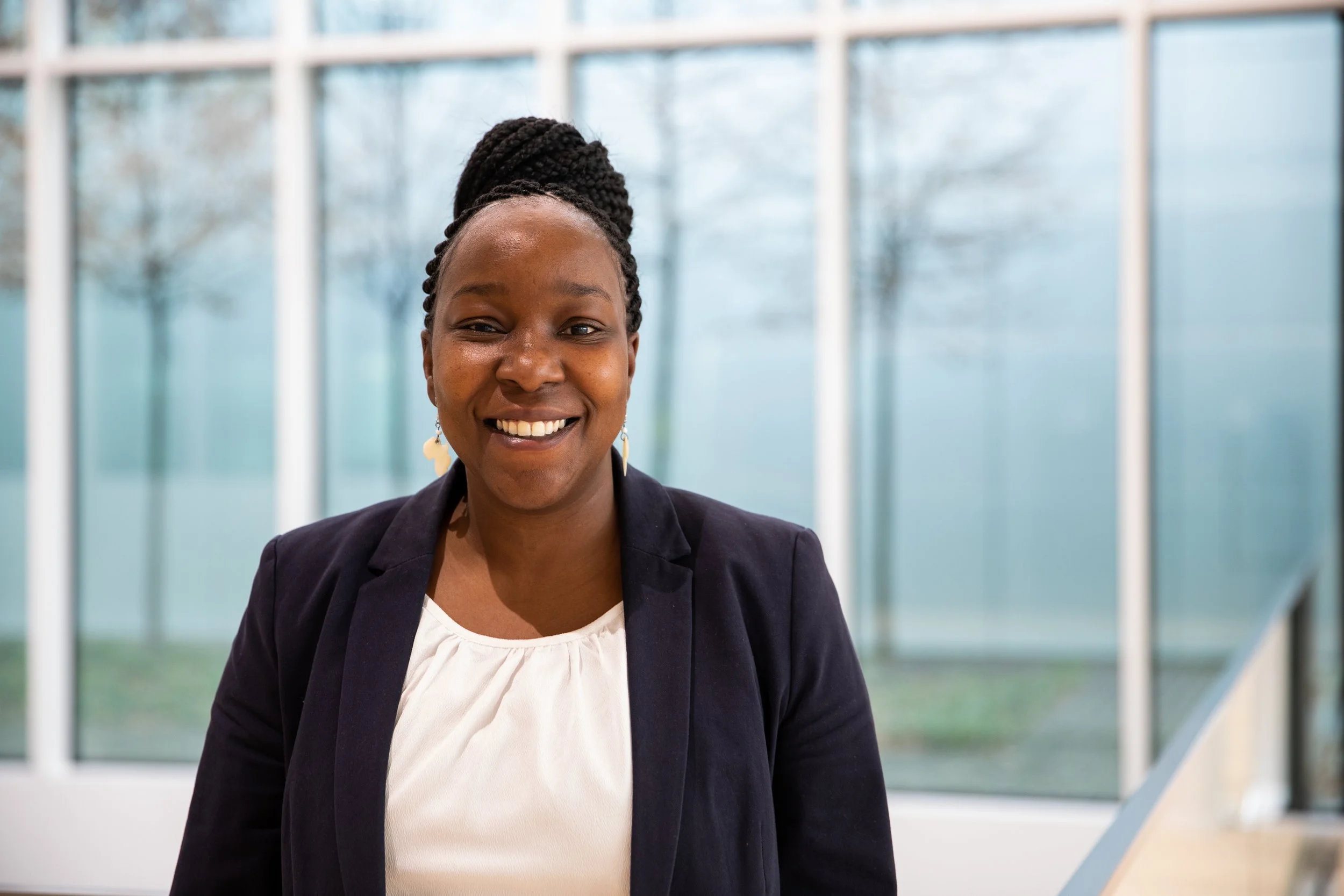
Mary Olwal, Managing Director of Grain Quality and Supply at Bühler.
What does it take to move grain from the farm to the table without losing it along the way? In this episode of Deeply Rooted, Mandla Nkomo speaks with Mary Olwal, Managing Director of Grain Quality and Supply at Bühler, about the hidden challenges and opportunities within Africa’s food system. From post-harvest losses and grain storage to processing, local expertise, and workforce development, Mary explains why reducing food loss requires every part of the value chain to work together. The conversation explores how technology, education, and strong local partnerships can help build more resilient food systems, improve food security, and ensure more of what farmers grow ultimately reaches people’s plates.
Transcript
Mandla: Welcome to Deeply Rooted, The Business of Food in Africa. This is a podcast that explores the ideas, the innovations, and the people shaping Africa's food systems. And today we're talking about food loss, food security, and how technology and local expertise can help build more resilient grain systems across the continent. And we are fortunate, in fact, extremely lucky, to be talking to none other than a fellow Afro optimist, Mary Olwal, who is the Managing Director of Grain Quality and Supply at Bühler. Mary, welcome to the show.
Mary: Oh well, thank you Mandla. Happy to be with you. And I'm looking forward.
Mandla: So the reason why I call Mary a fellow Afro optimist is that we were in the same event about a year ago in Uzwil, in Switzerland. And this whole concept of being optimistic about our ability to solve problems on the African continent and finding, you know, lasting solutions really took root. And Mary, one of the things that I think still remains too big a problem on the African continent is this issue of food loss, right? Why do you think this is still so? Why do we still have such a major food loss challenge on the African continent?
Mary: Mandla, I'm not sure I will be able to answer your question completely because it is a complex topic around food loss, and it goes across infrastructure, systems, knowledge, the will to make a difference, or the will to solve the issues, and the acknowledgement that solving the problem has to include a whole spectrum of capital stakeholders. And that becomes a challenge, but it's an opportunity. I am convinced that the solution is there. We just need to make sure that everything is aligned, and everyone is aligned on solving the problem.
Mandla: I fully agree with you. Again, you’re coming out as an optimist and I'm excited about that. There is hope for us to solve it. And, one of the things that I've been asking myself. So you work mainly in the grain space and in your current role, previously you were working on rice, now you've got a much bigger role on grain. Where would you say, as far as grains are concerned, especially those grains that are important to Africa -- maize, sorghum, rice -- where do you think the biggest gaps are in these value chains that are leading to food loss?
Mary: On the import side, I would say, there is what happens in the origin countries, where it’s really close to the farm and making that process efficient and having solutions, it sounds simple, but just the correct way of drying them, storing them and then transporting them. And then you bring them on into the importing countries. And then there is a point where there is technology and that's part of the technology in the area that I lead, I have a privilege to lead. It’s then unloading the ships and then the journey starts. The grain moves from the ship to my table. And in between there, I talked about infrastructure, how fast do we get it to where it needs to be? What kind of transportation mode do we do we have? And in this process, it's always the grain is stored somewhere -- is it moist, is it dry? And that's why I was saying that the issue is a little bit complex because there's so many players involved in this. I mean there are ways where the infrastructure works. And then it fits also in the place of the country. Most of when we build food parks, for example, most of them are very close to the ship. So you unload the ship and get it to a storage silo, which we have technologies for, it is monitored, and then the grain stays whole and tries to get directly into the mill and then back to the consumer. So a very efficient way. But then there's also a point of, even if you did that, then you have the flour in a bag, leaving the facility and getting to Mary's table. And in between that process to the small -- in Kenya, we call them ‘Dukas” the small kiosks.
Mandla: Small shops, yeah.
Mary: So from the factory to the small shop, there is also a whole infrastructure that has to be considered from packaging, the right packaging, to also then how it is stored in the small shop and then stored at home. So there are so many places in the value chain where the loss could happen. And obviously, as I said, there is technology and there is, I think, ways to make that more efficient. But the most I mean, the biggest loss happened closest to the farm.
Mandla: And, I think that's been my experience as well. I did some work in the maize and soybean space a few years ago, and one of the things that was very clear was that, if you have, say in the field, a potential yield of ten tons of any grain, what actually ends up leaving that farm could be anything as low as seven tons. And what it does is it kind of increases the cost, right? Of what is leaving the farm because the input costs associated with production are now being spread across a smaller parcel of product as opposed to a greater proportion. And I know that you are very passionate, Mary, about the story of cassava, and when we look at cassava globally, we see that from a production perspective, Africa still leads the production stats. But when we look at processed cassava products, Southeast Asia actually does more processing than Africa does. What's been your experience in trying to unpack the challenge of a crop like cassava, which is a staple to many Africans, but it's still got so many issues associated with post-harvest loss. What's been your experience in trying to figure that out?
Mary: Trying to figure out, and I'm saying trying because we have not figured it out yet is, as you said, there is processing knowhow somewhere, and there are farms. Cassava is produced, and Africa produces the most Cassava, and consumed also quite greatly, but I think one of the fundamental topics starts on the farm because we have a very fragmented farming. That also hinders the mechanization on the farm. And there is a lot of social reasons why it has fragmented the way it is. So that's something that needs truth or needs a solution, in a way. And then cassava itself as a plant or as a root has a, how do you call it, a technical challenge behind it, because it's just spoils very quickly. So, you have a logistical topic which keeps it fragmented and mechanizing it and industrializing it becomes a challenge. Now, are there other plants that may have similar conditions? I think there are, but I'm not an expert, but I would imagine processing potatoes is not too far away. Without being an expert and quoted on this. But then here is where I say, the industry, and it starts from the farm to the processing plant, where the will is, to solve this problem, because it will take every person in the value chain of cassava to be able to solve this problem. Individually, I think everyone has a form of a solution, but I think the holistic solution, especially for the African continent, hasn't been found yet. Now, do we give up? No, we don't. We try and find partnerships and I can say also for us as a company, being a European led company, we are also working to find partners closely on the ground because I mean, I may have been born in Kenya, and away for years, and we need the local expertise or the local understanding of how the system works to be able also to create a solution that fits with the system. I mean, we can invent as many cassava processing solutions in Uzwil as we want, but they have to fit.
Mandla: Yeah. I mean, you've recently been on a work trip to the continent, and you told me earlier that you've been to East Africa. What has surprised you about what still needs to change in as far as handling grain or produce in East Africa? What surprises you about what still has not changed? And what stood out the most from this recent trip?
Mary: What has not changed that surprises me is two things. That’s change and not changed. It has changed in the sense that how much maize, for example, Kenya imports compared to when I was growing up. And I had a feeling everybody eats Kenyan maize. I mean, that surprises me. Reasons are more, much more, Kenyans than there were twenty years ago. That's a part of it. But I would imagine that we also have agricultural practices that should allow a country like Kenya to grow its own maize and be self-sufficient. I mean, that's what I would have expected. But also at the same time, and then go upcountry and call it. And I still find the practices of these small farmers growing their maize in these small spaces and then doing everything by hand and taking it to the tiny little posho mill in the corner. And I thought that would have changed by now. I mean, Kenya is one of these countries that has like a little bit of both extremes. It surprises me also that I go to Nairobi and I go on the streets and the newest street food, or not the newest, but what was not there before is chapati is a street food that everybody eats. And growing up, it was the food that was eaten up over Christmas. So there' these two worlds a little bit of the facts. But in the end it comes up with chapati is also a food that is wheat and wheat is important. And then you get also into the connection of , dependence on imported grains that seem to be more affordable than the local.
Mandla: So I think you raised an important point, Mary, around on the one side in the countryside where production needs to take place, not a lot has changed. It almost feels like people are in a time capsule and they've not really changed a lot or impacted a lot. But that lack of change, you are now seeing it in the streets of Nairobi where because people can't rely on local production in Kenya, they are relying on wheat flour that is not grown in Kenya. And the staple is now a product that is based on wheat flour. What would you say are some of the vulnerabilities then that Kenya exposes itself to by having a shift like has happened now, where the staple is actually based on a crop that's not grown in Kenya, but has to be imported into the country.
Mary: Oh, the vulnerability is pretty. I mean, the last couple of weeks or the last couple of years has really shown us. I mean, when the supply chain works perfectly and the imports arrive, and then we have our sheep and loaders, we have our silos, we store it, we process it, the Kenyan has this chapati on his table. Now, this. But it's a vulnerable system in the sense that if something changes in this value chain, then you have a food security issue. And hungry people are very vulnerable people and they can resort to many, many other things. So, it puts the country in a situation of dependency, and also on how they make the policies. Because if you're dependent on food from somewhere else, then your choices may also be dependent on whatever your food is coming from. And, that is the vulnerable position. And I'm speaking here as a Kenyan, that is then the vulnerable position that we find ourselves, which goes into many other, I mean, as a hungry people has around hungry population creates much, much more other socio economic topics that come with it.
Mandla: So, I mean, Mary, we've spoken a lot about the issues on the production side. We've spoken a lot about the potential vulnerabilities associated with global supply chains. I've been curious to ask you this since, we met for the first time. What inspired you to enter this space of food processing and food technology? Can you go back to a time and space where you said it is that one event or that one incident, or this series of incidents that sets you up on a journey where right now you are the Managing Director for Grain Supply and Supply at Bühler. How did you get here and what inspired you to move in this direction?
Mary: I'll try to keep it short because my journey at Bühler is quite a long one, a fifteen year long one, and with several stops. But at the core of it is, I found a space where I can work and contribute to the company and at the same time have a real impact on people's lives. I mean, I get to eat my cake and keep it. You know, it's basically that. So, this intersection of where you see really how technology touches everybody's life and makes a difference, that's what inspired me to join the journey at Bühler and has kept me here for the last fifteen years.
Mandla: That's amazing. And for a lot of listeners who might not be familiar with what Bühler does, tell us the critical role that you, as a company, play in the space of grains and the food ecosystem in general.
Mary: In short, over the 160+ years
Mandla: And you've not been at Bühler for that long?
Mary: No, no, no, no, no, no, but this company, over generations, has been part of the food ecosystem. And, basically, if you looked at the Bühler portfolio, and I'm concentrating on the food part - the food and grains part of Bühler, we touch with our technology, the grain processing right from the field. I talked about loading ships, storing, and going through the process into - I take rice, you have rice mills, I take wheat, you have wheat mills. And after that, you have wheat flour and we transform that flour grains into biscuits and into waffles. And so actually, you may or may not know this, but every day in your life, you come in contact with Bühler through your food in some way. And I always top it off with, if you are from a part of the world where you enjoy a beer in the evening, we, Bühler, is involved too in your malting or in your brewing process. So also, the food, the staples, but also, and I have to mention, my beer, my malting, because that's part of the business that I run and I will be scolded by the team if I did mention the beer.
Mandla: So I guess what you're saying, Mary, is that, if any of us had breakfast today, or had lunch, or had a swig at a beverage of choice, especially the ones that have bubbles, you probably had something coming off a Bühler process line. And obviously you guys are technology heavy organization. And when we started talking, you did say that one of the things that impacts, you know, food loss and so forth is people's lack of access or lack of utilization of technologies. When you look at the work that you guys are doing at Bühler, I mean, what technologies are you currently working on that you think are going to be game changing in as far as, you know, supporting food security is concerned?
Mary: I mean, that's a difficult question to ask without getting too technical. But I would, I would like to go away a little bit from the technology. I’ll come back to it in a second. But what we're trying to do, and it depends on where we are in the world, because the world sometimes has a different challenges where we are. And I will stay in Africa, for example, for now, is a grain processing technology. And I'm saying from the grain to the end product, what we try to make sure because one of the things about food is accessibility of food and affordability of food. So, we work through the technology that we have to make sure that we have process solutions that lead to affordable and nutritious food, because also in the process of storage and all that, there is also some nutritional loss that can happen, not just the physical loss of food. So, through our technology, we try to touch that. We support our customers and our partners to develop solutions that are fitting to the markets to be able to make food accessible, affordable and nutritious. So, it is difficult to pin one technology because normally we think in value chains and processes and they are different technologies in that whole process. So that's why I'm trying not to pinpoint one specific technology or one specific machine, because our core is developing processes that brings nutritious, affordable and accessible food.
Mandla: I mean, you’re absolutely right. And the one that you touched on resonates quite strongly with me because I attended a food show a few months ago, and one of the things that I noticed was how everybody who is in grains is leading with whole grains. Everything is about how much whole grain there is, how much fiber there is. And like you rightly say, having the technologies that allow for the right kind of processing that allows for communities and people to access whole grain product, which has got good storability, good nutrition content. I'm assuming this is some of the technology that you're talking about in your work at Bühler.
Mary: Yes, precisely that.
Mandla: That's exciting. And as we move towards the end of our conversation, Mary, you mentioned, and I would like to pick your brains on this. How then do we solve the local knowledge challenge in food value chains, because we, you guys, can make the equipment from the sounds of it. You can get the equipment, you can make the equipment. But how do we make sure that in each country, in all the countries, there is a The right Kendra of technician or engineer or processor who understands how to operationalize this equipment and give us the value of this technology.
Mary: I mean, as I mentioned before, we are a technology company, one hundred and sixty five plus years. I'm very proud of that and of our know how, but we also have a great legacy of education starting right in Switzerland, where we take our apprenticeship programs very seriously. I mean, there is nothing around this apprenticeship program, it's part of what we believe in. So right from our roots as we developed technology and processing technology, we developed knowledge to go with it. So that's part of our DNA. Now, if we translate that to today and also go back on to the African continent. Specifically, and I'll start with that one, because I think by now everybody knows about it, I will go to Nairobi. I mean, in Nairobi we have the African Milling School, which is founded, run, managed by Bühler. And what we do there is offer training to technicians in the grain space. And we believe that to really have real impact for our customers and to get, extract the value out of the technology, we need people who also understand the technology and, I don’t know how to put it, we just want to transfer this knowledge. The thing is, now I leave Nairobi with the African Milling School and I go to Nigeria, to Kano, where we have the Grain Processing Innovation Centre. I hope I've said it properly.
Mandla: GPIC, yeah.
Mary: Where we also have partners, customers and our ecosystem coming in and doing trials and learning and passing knowledge. But that's also where we learn and understand what are the local needs of these countries or for this specific grains and for this specific crops, we spoke about cassava. And there's also knowledge transfer both ways. And then I take a tour to Ivory Coast, where we also have a specific center for cocoa. So education is, I'm not leaning too far out of the window to say, a non-negotiable to Bühler. But for our internal know-how to be able to develop this processes or this technology, but also for the whole ecosystem, because, as you said, technology alone, I will say it has to be scalable. It has to fit to the needs of the market, but it has to be usable. And part of being usable is that people know what to do with it. And that's where our education comes in. But you mentioned I was recently in Nairobi. I mean, it's a just a recent as a couple of months ago where we had the graduation ceremony at the African Milling School. So I was very honored to attend. And we just celebrated ten years of African Milling School. So, over the course of the ten years, there were 1,600 millers about trained. And the impact is exponential because you train one and then go back to the mills. They make sure the processes work well. You have less food losses if the process is done well. I go to rice, for example, there's less broken rice and then you go on. So you also have that effects of this education. There is an efficiency in the mill. So, the output is more, the customer earns more, jobs are created, new ideas are generated. And I think it's just a win at so many levels when we have well trained, all hands on training, at the mill with millers, for example, in this case, we are speaking about millers, for millers because they come from the mills, they learn, we have modules, they learn a couple of weeks, and then they go back to the mills and apply what they learned. And I think that's a recipe that has worked well over the years, starting in Switzerland and transferred into the world, and adapted to the local needs of where the schools are. And I've just mentioned the ones in Africa. If I continue around the world, we will not be finished today. Mandla and it's something that I'm personally very proud of, but I believe it's fundamental. I surely walked into plants, not just food plants, but plants across the continent that are not running because nobody can run them.
Mandla: That’s correct. That's correct. And in fact, I've got a running joke at work that, when I visit food processing facilities on the continent, I'm looking for, not only their scrapyard or their graveyard because there's always equipment that is redundant, largely because the team on the ground could not operationalize it and could not maintain it. Which raises this question I've been itching to ask you. I know you guys are normally known as the business that sells equipment, but talk to me about maintenance, and how much that is so important because I dare say we don't have a maintenance culture on the continent. And what are you, as Bühler, doing about that?
Mary: I mean, that's, also with training. And in this case, if you describe such a case where you walk into this graveyard of machines or equipment that are not being used or not being used at the capacity they should, then there was clearly capital to buy the machinery.
Mandla: Exactly.
Mary: And that's what we normally start from, okay, there is no capital. And then there it's because there is no and it goes back to knowledge. And now maintenance goes also back to knowledge. What I mean, and I don't believe anyone wants those things to stand around, they're just at a loss of what to do about it. That's true. So I cycle back to training, first of all, getting the right solutions for the right problem. Now, I will start from whatever is standing around. Was it the right one for the problem that was being solved? And that's where we come in because we, as I said, I tried not to say we sell equipment. I say we sell a process and we go into that and talk to our customers and understand which raw material they want, how they want to transform it and what they want to transform it into and find the fitting solution. That's because we invented this machine. You have to have it, so it has to fit to you. And then very important to us is as part of that, we offer training. We've had a whole lot of the crew that's going to run the plant later to have a training and also there are modules that you can visit and across the different schools that we have. And then also from a service point of view, we offer packages, service packages on it. Okay. We will come a couple of times in a year, look at your plans, but also with your people so that you understand that you can do the simple maintenance and service to these machines on your own, or at least have the knowledge to understand, this is time for me to call someone before it completely falls apart.
Mandla: Completely, completely. I think you’re so right, because that connects very well to the point you're making earlier around the importance of building local knowledge and expertise to understand how these machines run, but also to look after the machines so that they keep running. And your point around the fact that you bought the machine in the first place meant that you had capital, you had the money to buy it. Now, if it's sitting in a corner and not being used, that's dead capital. It's capital sitting there. That's not helping you. And that's exciting to know that there are solutions out there. I do want to move us, as we conclude, to your experience as a professional, who works for a large corporate, like Bühler, that is in the business of, solutioning around food processing. Getting an opportunity to give back and to share your knowledge with African food processors. How has your volunteering experience been with Partners in Food Solutions? I can see you're smiling, so, this is close to your heart.
Mary: It's very close to my heart. I claim to be. And I claim and I proudly claim it, and they can't tell me what they want. I claim to be volunteer number two at Bühler.
Mandla: Oh, wow.
Mary: So, I remember I can go back to that day when, you know him quite well, Ian Roberts had a management meeting and he introduced Partners in Food Solutions to the group and say, “okay, now we're part of it.” And I couldn't hold my excitement. I was like, ”Ian, when can, when can I start? When can I start?” So at the very beginning, I volunteered and I had, and obviously, pretty biased, chose to volunteer for some, companies in where else? In Kenya. And at some point went even to a country lead level, coordinated a little bit of the volunteers and also the people on the ground and the volunteers within Partners in Food Solutions. Sometimes we are willing to do a lot then, but we don't have the time, so I had to say, okay, I'm not superwoman, I cannot do everything. But what I still do is I make sure that I'm an advocate for Partners in Food Solutions and encourage my team and the teams around me to volunteer because it's so fulfilling to support companies out there to develop solutions that we collectively as volunteers, think they're simple, with all the background we have and all the resources we have around us, you know, at this big corporate called Bühler, but a big issues for this, small enterprises, but I think with every volunteering I did, and I think I heard a lot of, I believe, I don't believe, I know, I got more out of it and they did amazing. And as I say, that's so fulfilling. And it takes actually not too much, but it gives me much, much more. Just seeing these companies grow. And if you follow them or solve with them together, solve problems or issues or just support and give a little bit of input. You think it's a little bit of input, but it makes a big difference. And that's very fulfilling. And that's a very personal thing for me. And I am, as you ask, why am I still around here? I'm happy and honored to work for a company that supports something like that.
Mandla: I mean, that's amazing. And, I was counting, I think you mentioned the word fulfilling about five times when you spoke about your volunteering. And I think what I've learned from our conversation today, Mary, is that food and food systems issues are complex across the continent, but they require us to step up, to use the knowledge and expertise that we have through the various platforms that are available to us, either to sell equipment, but also, maybe in your case, to volunteer and support a company that might not buy your equipment. And as we engage with the process, I think we, as people on the continent and the global community, then become part of the solution by deepening and building knowledge. So, thank you, Mary. This has really been a very engaging conversation with another Afro-optimist. And I really want to thank you for joining us. And so, ladies and gentlemen, thank you so much for listening to Deeply Rooted, The Business of Food in Africa. Be sure to subscribe at deeplyrooted.blog or Apple Podcasts and join us next time for more conversations on the future of food across the continent. My name is Mandla Nkomo. See you next time.